
If you want to run advertorials — the editorial-style pre-sell pages that warm cold traffic before the product page — the first question is what to build them in. "Advertorial software" is a fuzzy category, though, because most of the tools marketed for it are general page or funnel builders. This guide sorts the real options by the job they do for a DTC brand, with pricing verified in September 2026 except where noted, and an honest read on what each one actually produces.
One distinction decides most of the shortlist: a page you build yourself versus the whole optimized page done for you. Almost every tool below hands you a builder — you assemble the layout and supply the long-form copy (or a copywriter or agency does). Several have AI helpers that fill a section at a time; none of them writes the whole page. Only one delivers the complete, optimized advertorial built for you. Keep that split in mind as you read.
What makes good advertorial software?
Good advertorial software does three things well: it produces a fast, mobile-first page (most advertorial traffic is cold and from social, so speed and scannability decide conversion), it supports the long editorial structure an advertorial needs rather than just a hero and a form, and it makes testing cheap, because advertorials win through iteration. Judge every option below against that bar.
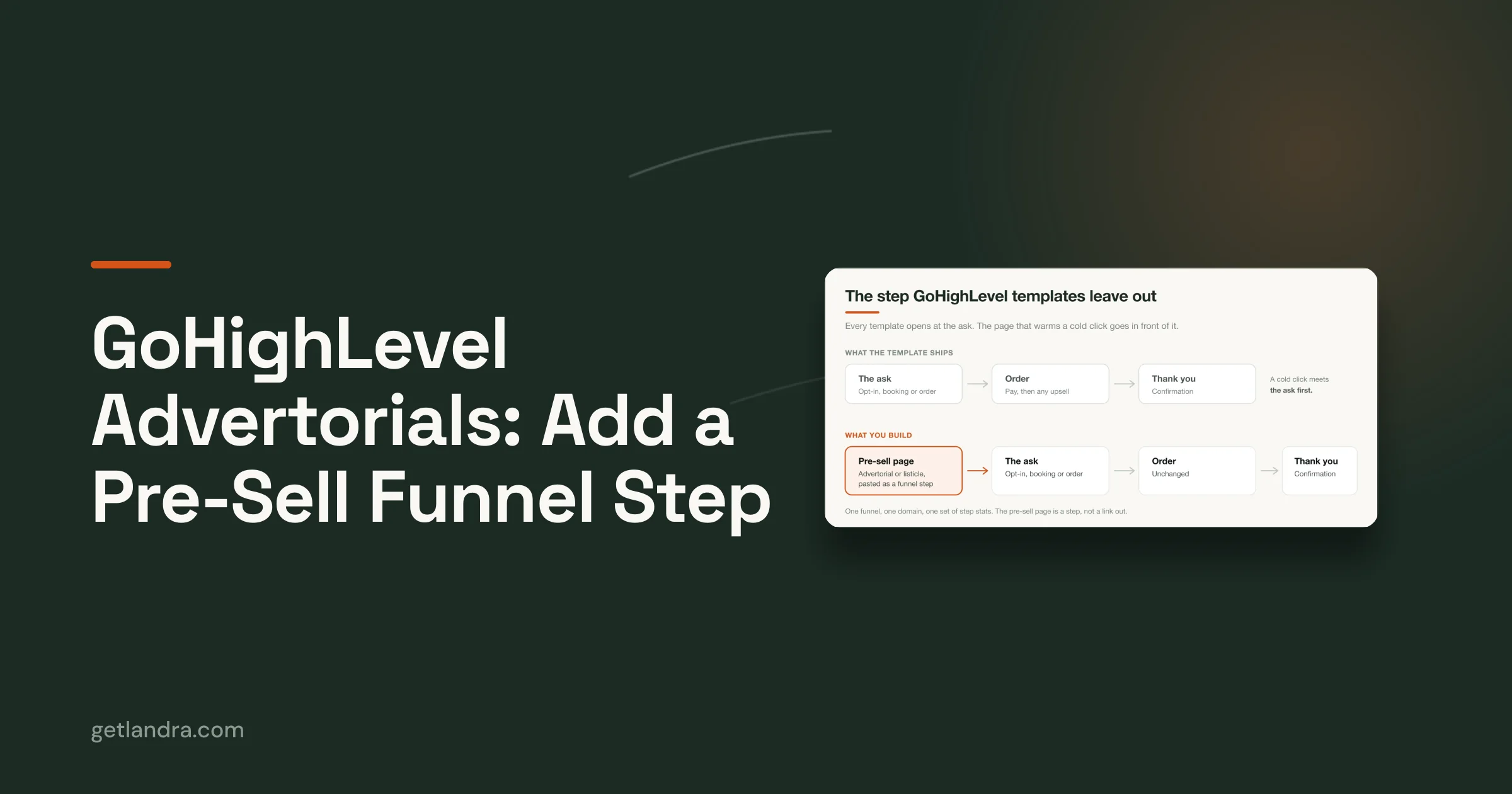
It also helps to know the three shapes the market comes in. Funnel builders (Funnelish, ClickFunnels) host the advertorial as one step in a multi-page funnel with their own checkout and upsells. Shopify-native builders (Replo, GemPages) host the advertorial under your store URL with live product data. Generators (Landra) build the whole page — copy, structure, and images — from a URL. Which you need depends on whether your bottleneck is the funnel, the storefront integration, or the writing.
Why advertorials are worth the effort
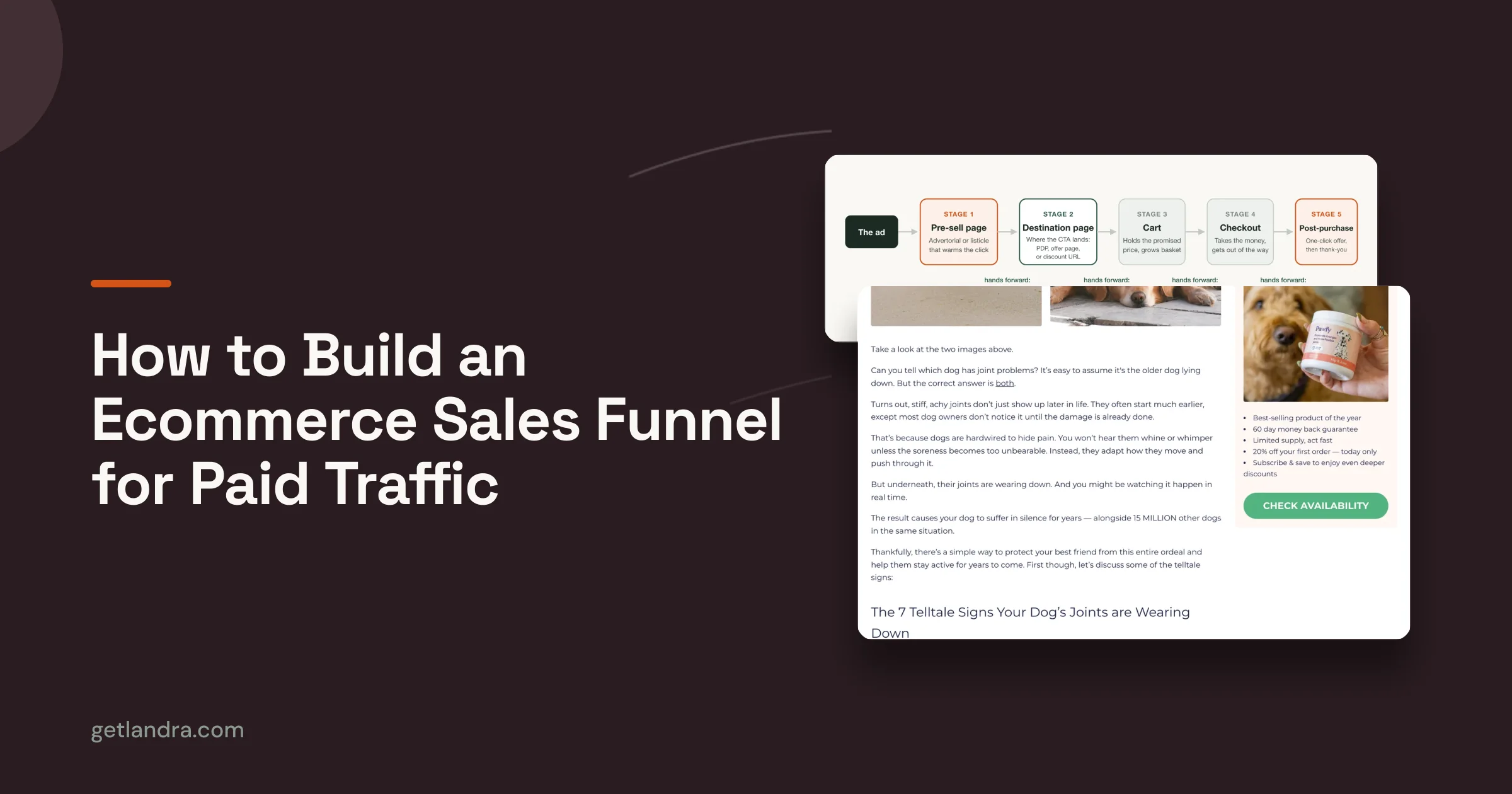
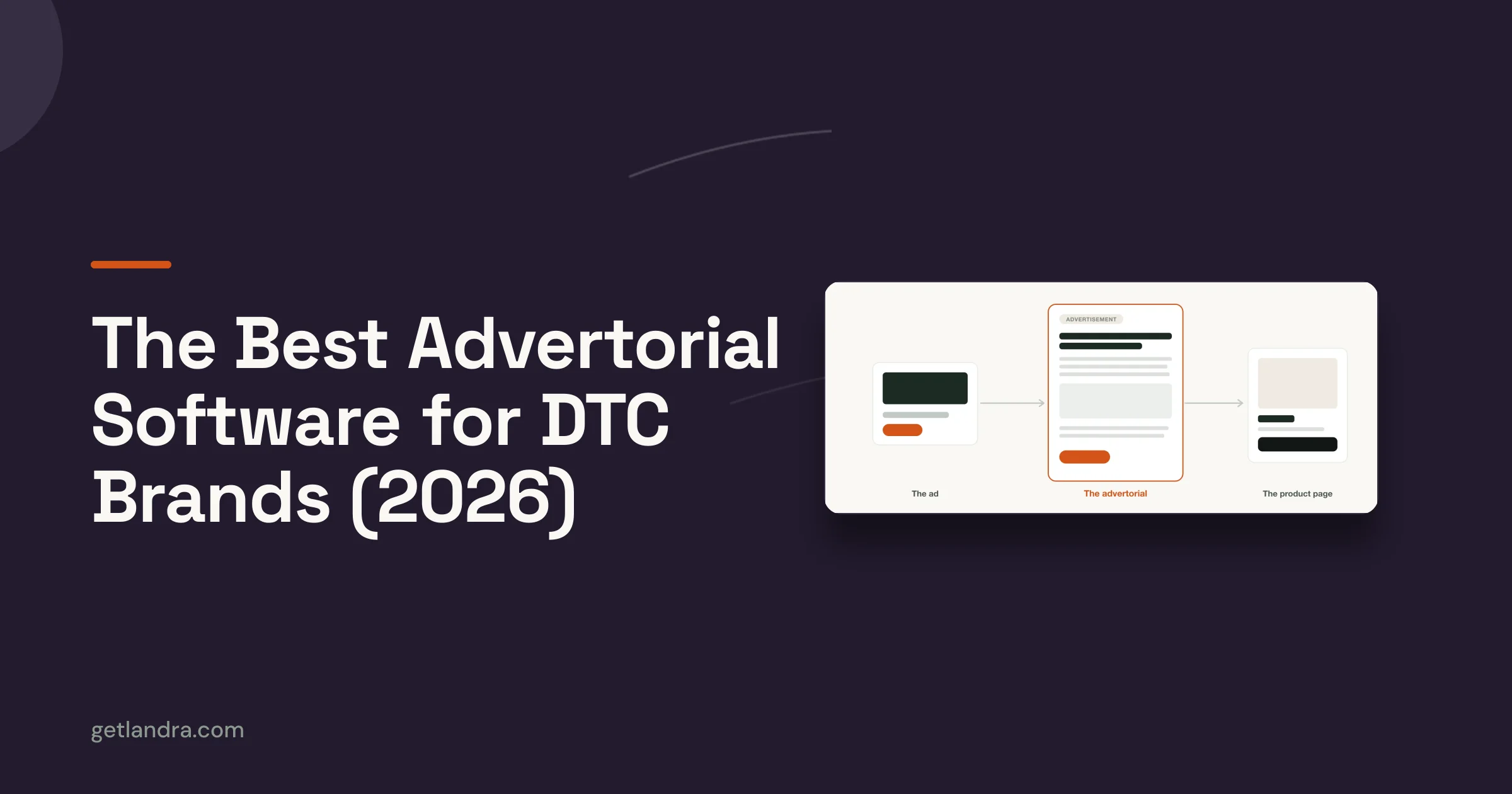
Advertorials earn their keep because they warm a reader a product page can't. Sending cold ad traffic straight to a product page asks a stranger to buy before they understand the product; an advertorial educates first, then leads to the offer. According to a DTC landing-page benchmark from MHI Growth Engine (February 2026), product pages typically convert at 1.5–3.5%, while advertorial and editorial landing pages run around 2–5% on cold traffic — the pre-sell page does the warming the product page can't.
That lift is the reason the advertorial has a fixed job in a paid-traffic funnel: it's the step between the ad and the cart. It's also why the format is productized: agencies like Good Advertorials sell a single advertorial page as a done-for-you service (around $997 per page as of June 2026, live in a week), and CRO shops like SplitBase and Apexure build them as a core offering. When a format is sold as a repeatable service, it's because it reliably works.
The best advertorial software for DTC
Landra: best for the full advertorial done for you
Landra is the only tool here that builds the whole optimized advertorial for you. You paste a brand URL and it studies your product, claims, and customer voice to understand the brand, then generates a complete page — narrative copy, section structure, and images — as an advertorial or listicle, tuned to the audience you name, then drops you into an editor to refine it. Where every other option hands you a blank canvas to assemble and fill in, Landra delivers the finished, optimized page, with best-practice structure, copy, and images already in place, tuned to the customer you're targeting.
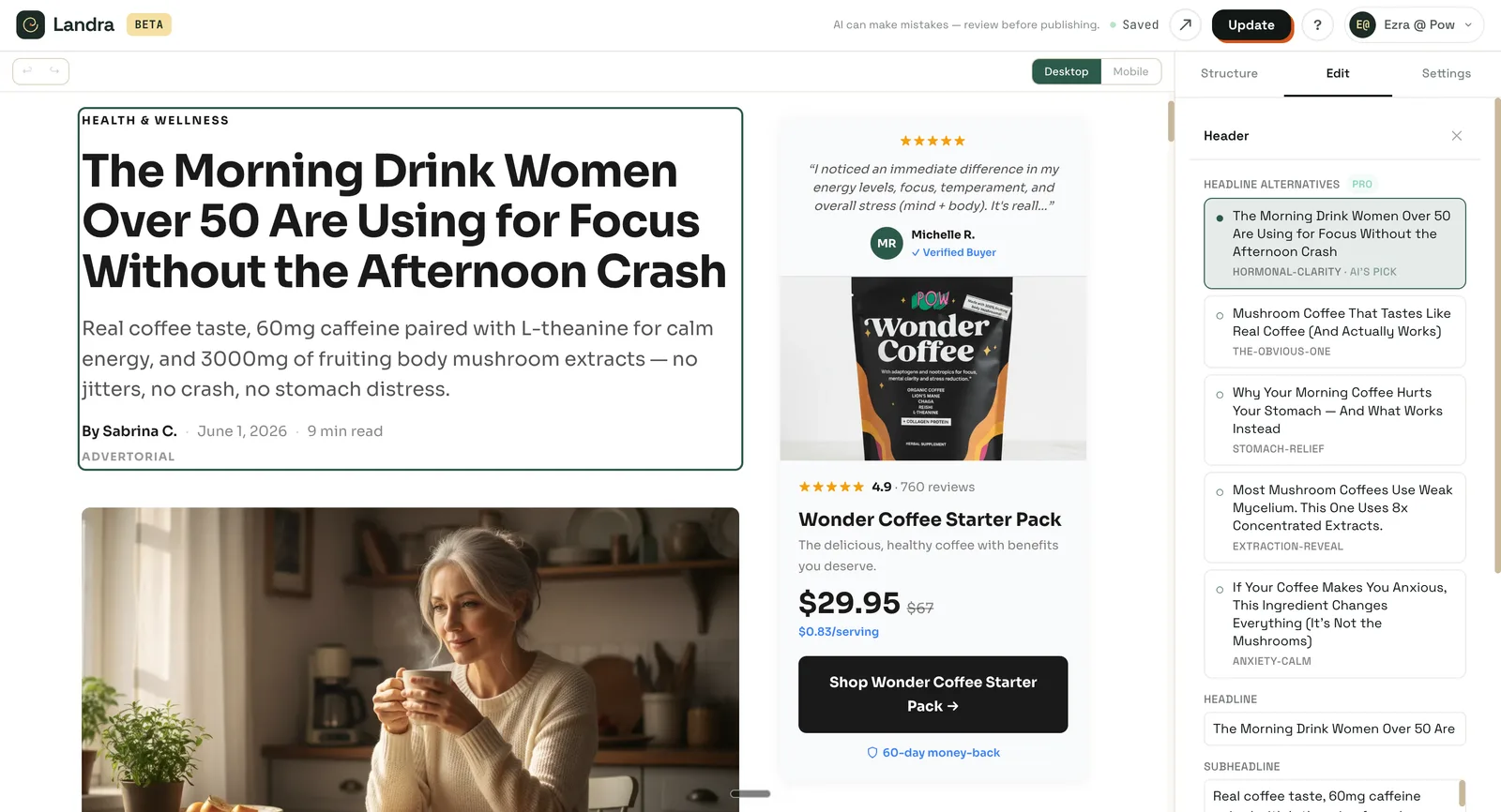
- Pricing (September 2026): 14-day free trial, then from $19/mo (Starter: 1 stored page, 2 generations a month), Pro $79/mo (10 stored pages, 20 generations), Pro Plus $199/mo (100 and 100). There is no free tier. AI images, AI section writing, and multiple headline options are trial-only on Starter and included from Pro up.
- Best for: DTC teams whose bottleneck is writing and testing long-form pages fast. Not for: teams that want a hosted multi-step funnel with its own checkout.
One honest caveat on social proof: Landra is on the Shopify App Store as of September 2026 ("Free to install. Additional charges may apply."). That is the App Store's standard line; billing is the plans above. But it's a new listing with zero reviews, next to GemPages' 4,203 and Replo's 188. If a long review history is what buys your confidence, that's a real mark against us today.
For the format itself, see how to write an advertorial.
Funnelish: best for advertorial funnels with checkout
Funnelish is an ecommerce funnel builder that explicitly supports an advertorial step, plus listicle and sales-page templates, a custom checkout, and native one-click upsells. It's the more affordable funnel option, built around the full advertorial → offer → upsell flow rather than a single page.
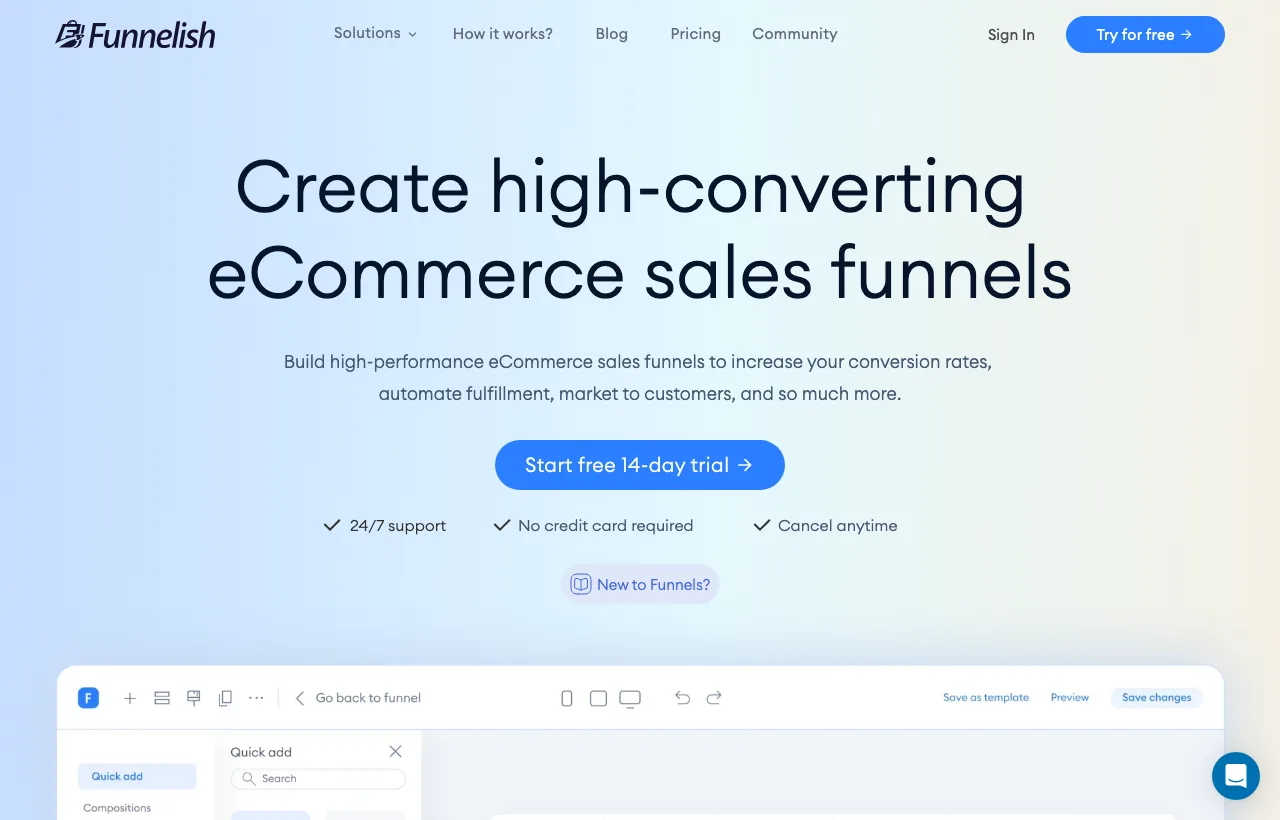
- Pricing (September 2026, verified on funnelish.com/pricing): Basic $49/mo, PRO $99/mo, Advanced $249/mo, Enterprise custom; 14-day free trial, and no extra processing fees on top of your gateway.
- Best for: DTC brands wanting an advertorial funnel with checkout and upsells. Not for: teams that want pages hosted inside their Shopify theme. It lays out the page; it doesn't write the copy, and alone among the tools in the table below it advertises no AI features at all. Its funnel-builder page sells drag-and-drop, containers, repeaters, popups, and A/B testing (September 2026), with AI nowhere in the list. Every word on your advertorial is yours to write or buy.
ClickFunnels: best for complete multi-step funnels
ClickFunnels is the best-known funnel builder, hosting the advertorial as one step in a funnel that includes email, checkout, and courses. Its AI design assistant can generate a layout from a description. It's powerful and all-in-one, but it's the priciest entry here and it hosts its own pages rather than living in Shopify.
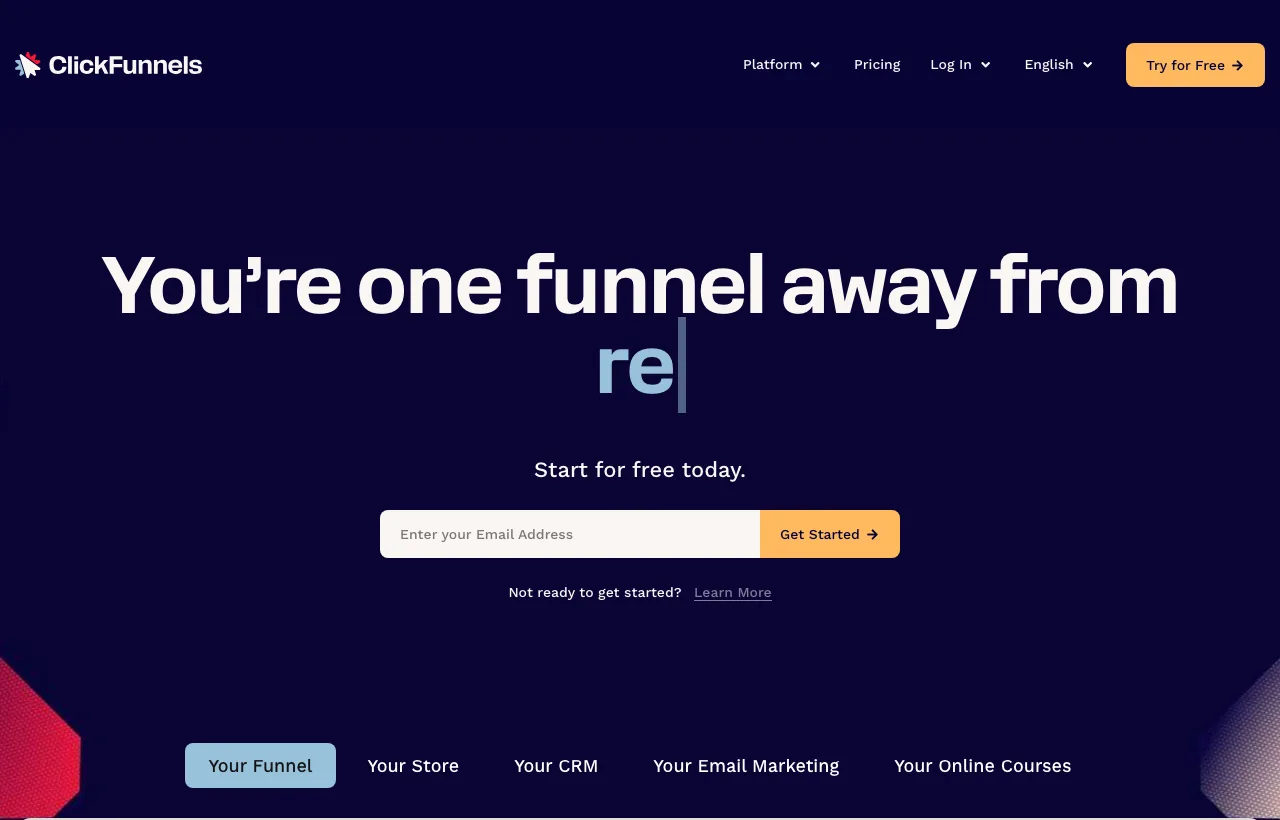
- Pricing (September 2026): Launch $97/mo, Scale $197/mo, Optimize $297/mo, plus an annual-only Dominate tier at $5,997/yr; 14-day free trial and a 30-day money-back window.
- Best for: marketers building a complete multi-step funnel outside Shopify. Not for: brands wanting pages native to their Shopify store, or a low entry price. It lays out the funnel; it doesn't write the advertorial.
If the funnel machinery is the part you don't need, the ClickFunnels alternatives guide compares the page-only tools side by side.
Replo: best for advertorials hosted on Shopify
Replo is a Shopify-native visual builder, so advertorials you build live under your store URL with live product data and native A/B testing. Its AI Builder can generate a starting page from a prompt, image, or URL, but the canvas — and the copy — are still yours to assemble.
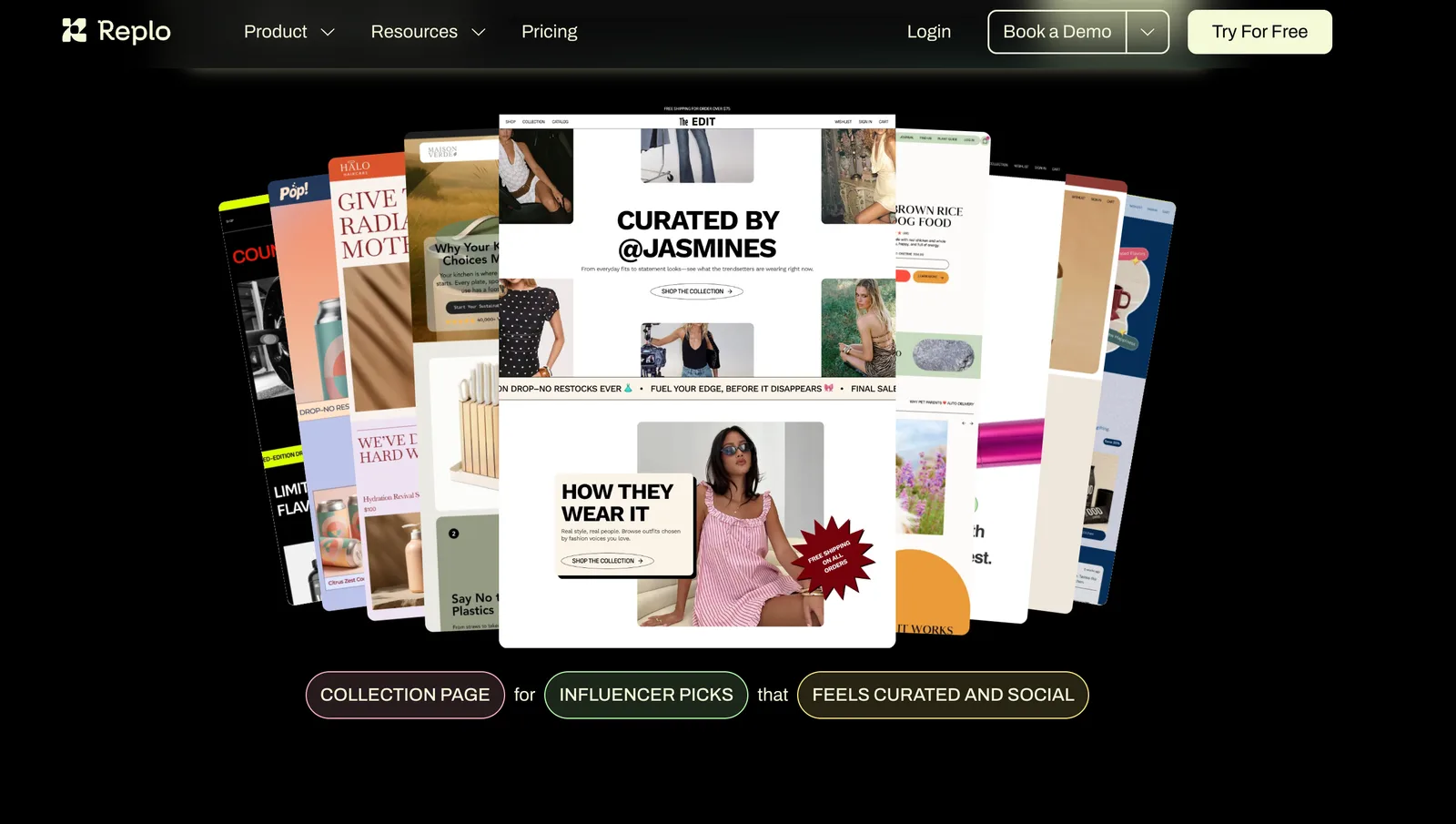
- Pricing (two figures, so budget for the higher one): free plan for design and preview; publishing from $99/mo (Starter) on replo.app in June 2026, while its Shopify App Store listing reads $119/mo for Starter as of September 2026 (15 published items, plus $99/mo for each additional store). Pro $499/mo. We couldn't re-read replo.app/pricing this month to reconcile the two, so check the number at checkout. The listing carries 4.6 stars across 188 reviews.
- Best for: Shopify teams wanting on-brand advertorial pages with native data and testing. Not for: non-Shopify funnels or tight budgets. See Replo vs Landra for the full comparison.
GemPages: best cheap Shopify option
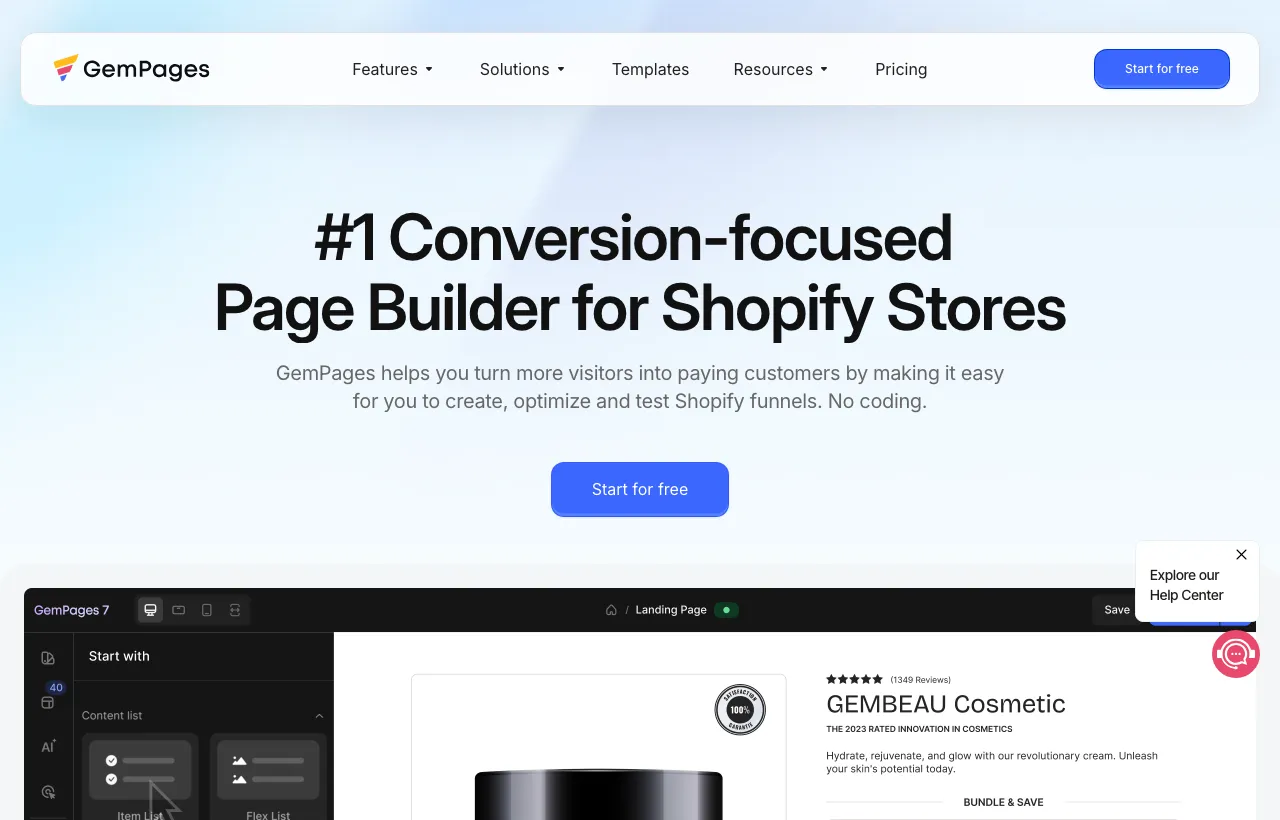
GemPages is the budget Shopify-native pick, with drag-and-drop layout, live product sync, and templates aimed at listicle and pre-sell pages. It takes the format seriously enough to headline a solution page "Advertorial & Listicle made easy."
Its AI is real but narrower than "AI page builder" suggests, and the shape matters before you buy on it. GemAI Image-to-Layout turns an image, a URL, or a Figma export into an editable layout (60 sections on Free, 300 on Build, unlimited on Optimize), so it clones structure you point it at. The separate AI Content Generator fills a section of copy at a time from a prompt you write, metered at 100 a month on Build and 200 on Optimize and Enterprise; the pricing page calls them "rewrites" while the help doc describes generating from scratch, so read your own plan's meter carefully. Either way you're the one choosing the sections, writing the prompts, and judging the output. It won't write the advertorial from your brand URL.
- Pricing (September 2026, verified on gempages.net/pages/pricing): free plan (one published page); paid from $29/mo (Build, promoted at $23), Optimize $59/mo, Enterprise $199/mo, with a 30-day money-back window. Two ceilings to check against your volume: Build caps post-purchase upsell volume at "$100 per month" (Optimize switches to "Pay commission as you grow," and the rate isn't published), and Offer A/B Testing only appears on Optimize and Enterprise.
- Best for: budget Shopify merchants. Not for: full funnels with their own checkout, or non-Shopify sites. It's the most reviewed Shopify app on this list by a distance (4.9 stars across 4,203 reviews, September 2026); if you're weighing it against the rest of the Shopify-native field, see GemPages alternatives.
Unbounce: best standalone option with A/B testing (from the $149 tier)
Unbounce is a standalone landing-page platform with A/B testing and AI copy assistance on its upper tiers — a fit if you want to host advertorials off Shopify and optimize them across paid campaigns. You design the page; the AI accelerates copy and routing.
Price the testing before you price the pages. As of September 2026 Unbounce runs four tiers, and A/B testing does not start until the third. The $29 entry plan publishes five pages with no testing at all, which makes it a page host rather than an optimization platform, and optimization is the whole reason to pick Unbounce over a Shopify-native builder.
- Pricing (September 2026, verified on unbounce.com/pricing): 14-day trial, no free plan; Starter $29/mo (5 pages, no A/B testing), Build $99/mo (unlimited pages, popups, sticky bars, custom scripts, AI copywriting), Experiment $149/mo (the first tier with unlimited A/B testing), Optimize $249/mo (adds AI traffic optimization).
- Best for: paid-traffic teams wanting platform-agnostic pages with real testing, budgeted from $149/mo. Not for: Shopify-native product data, tight budgets, or generating the advertorial copy.
A note on a tool worth watching: ConvertFlow explicitly markets building advertorials and listicles that educate paid traffic with long-form content before an offer — worth a look if that's your exact use case. Its App Store listing reads free for 3 campaigns, then $29, $99, or $299/mo (September 2026).
Quick comparison
| Tool | Type | Done for you? | Cheapest paid (≈, Sep 2026) | Best for |
|---|---|---|---|---|
| Landra | AI page generator | Yes | From $19/mo (1 page) | The advertorial done for you |
| Funnelish | Funnel builder | No | $49/mo | Advertorial funnels + checkout |
| ClickFunnels | Funnel builder | No | $97/mo | All-in-one funnels |
| Replo | Shopify-native builder | No | $119/mo (App Store listing) | Advertorials on Shopify |
| GemPages | Shopify-native builder | No | $29/mo (free 1 page) | Budget Shopify pages |
| Unbounce | Standalone + optimization | No | $29/mo, A/B from $149/mo | Off-Shopify paid-traffic testing |
DIY, software, or agency?
There are three ways to get an advertorial, and the right one depends on volume and budget. An agency (Good Advertorials at ~$997/page, SplitBase, Apexure; see the best done-for-you advertorial services) is the most hands-off and the most expensive per page, best when you need one or two flagship pages built by specialists. A page or funnel builder is the DIY route: cheaper monthly, but you supply the copy and the optimization yourself. A generator like Landra sits between them: it builds the whole optimized page for you at software pricing, which is the cost-effective path when you want to test many advertorials rather than perfect one.
One feature no tool gives you: disclosure
Whatever you build the page in, an advertorial running as a paid ad has to be labeled as advertising, and no software does that for you. The U.S. Federal Trade Commission's native advertising guidance requires paid content not to masquerade as independent editorial: use a clear term like "Advertisement" or "Sponsored," place it where readers see it before they engage, and make it stand out. It's a one-line addition in any of these builders, and skipping it is the single most common way an otherwise-good advertorial gets a brand in trouble. Build the disclosure into your template once so it's never an afterthought.
How to choose
Match the tool to your real bottleneck:
- Bottleneck is producing the page at all? Use a generator — Landra builds the whole optimized page (copy, structure, and images) for you.
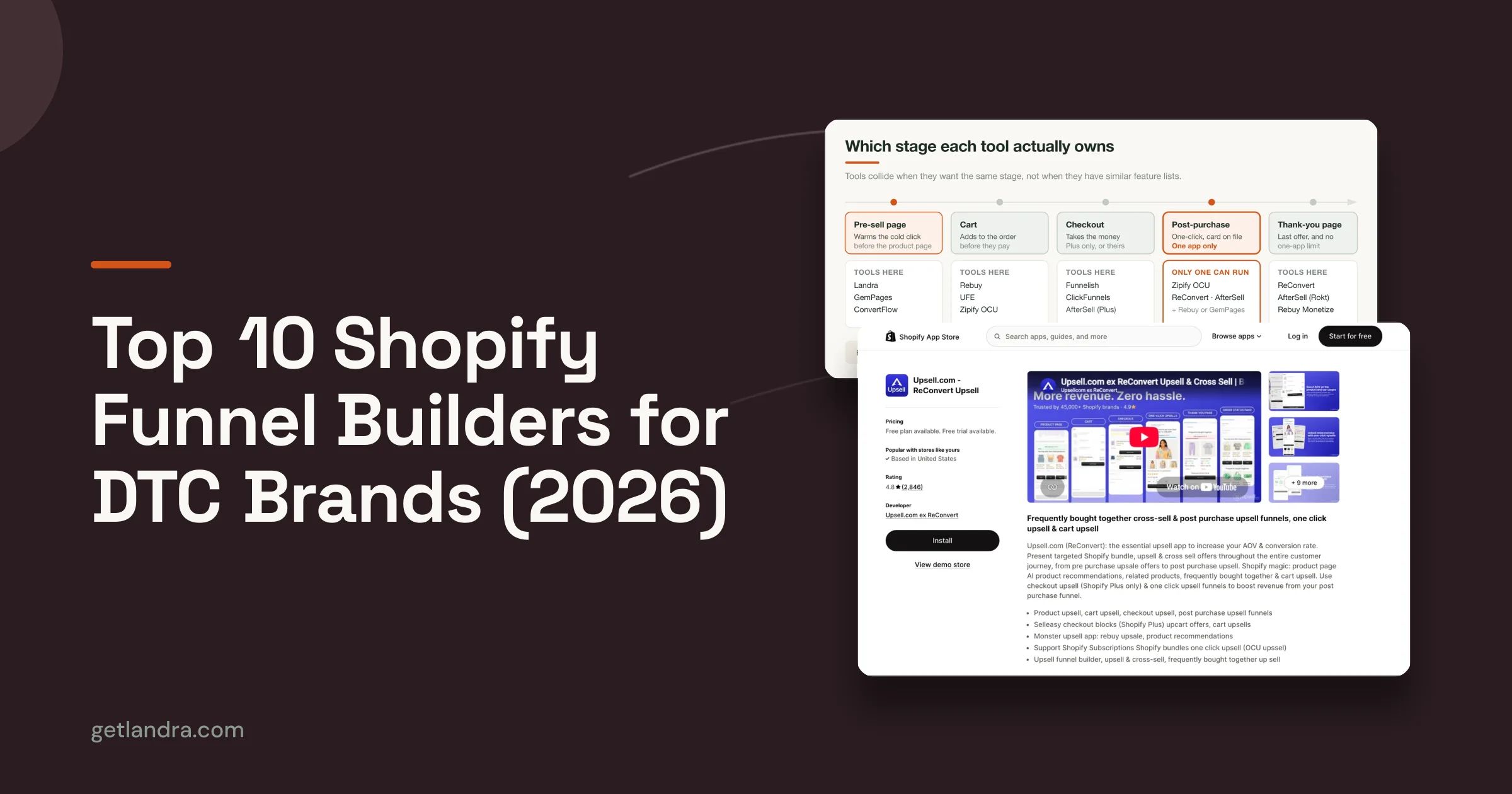
- Want a full funnel with checkout? Funnelish (affordable) or ClickFunnels (all-in-one). Check the Shopify funnel builders roundup first, because an external checkout switches off Shopify's post-purchase upsell apps.
- On Shopify and want it native? Replo (premium) or GemPages (budget).
- Off Shopify, optimizing paid traffic? Unbounce, budgeted at the $149 Experiment tier rather than the $29 one, because that's where the A/B testing starts.
Whichever you choose, the advertorial still needs a real problem, honest proof, and clear disclosure that it's an ad. For the format itself, start with what is an advertorial and how to write an advertorial; to compare the broader field of page builders, see the best AI landing page builders for ecommerce.
Frequently asked questions
What is advertorial software?
Advertorial software is the tooling used to build advertorial and pre-sell landing pages — the editorial-style pages that warm cold traffic before the product page. In practice most of it is page-builder or funnel-builder software; only a few tools generate the long-form advertorial copy and structure for you.
What is the best software for advertorials?
It depends on your bottleneck. For complete funnels with checkout, Funnelish or ClickFunnels. For advertorials hosted natively on Shopify, Replo or GemPages. If your bottleneck is producing the page at all, Landra builds the whole optimized advertorial for you — copy, structure, and images.
Does advertorial software build the page for me?
Most does not — it hands you a builder to assemble and fill in yourself. Landra is the exception: it builds the whole optimized advertorial for you — copy, structure, and images — from your brand URL and the audience you name, then hands you an editor to refine it.
How much does advertorial software cost?
As of September 2026 it ranges widely: GemPages and Unbounce from about $29/mo (though Unbounce gates A/B testing to its $149 Experiment tier), Funnelish from $49/mo, ClickFunnels from $97/mo, and Replo from $99 to $119/mo depending on which of its own price listings you read. Landra runs a 14-day free trial, then from $19/mo for one stored page. Most charge monthly by pages, funnels, or traffic.
Do advertorials still work in 2026?
Yes, for products that need explaining before purchase. According to MHI Growth Engine's DTC benchmarks (February 2026), advertorial-style landing pages tend to convert cold traffic at 2–5% versus 1.5–3.5% for a typical product page — because the page warms the reader the product page can't.