
Growing an audience that buys is not a reach problem. For DTC brands, audience growth is belief built before the ask. A cold visitor who lands on a product page still has to invent the reason to care. Most of them won't.
The feed already trained that habit. The Reuters Institute's 2025 Digital News Report, covering 48 markets, found weekly social-video news consumption rose from 52% in 2020 to 65% in 2025. In the United States, social-media and video networks became the leading route for news access in 2025 at 54%, ahead of television at 50% and news websites or apps at 48%. People meet brands the way they meet stories, in short video, then decide whether the next page deserves a thumb.
These audience development strategies run from cold acquisition to owned and earned audiences. Each item names the page or asset that does the work.
If acquisition cost is the bottleneck, start with pre-sell pages and awareness matching. If the page doesn't convert, fix proof, comparison, and the path into checkout before you buy more traffic. If buyers don't come back, build email, SMS, and a community you can reach without paying the platform again.
Don't install all ten. Ship the asset that sits just before the leak, and judge it on the next click that matters.
Table of Contents
- 1. Editorial Pre-Sell Pages (Advertorials) for Cold Traffic
- 2. Awareness-Level and Message-Market Matching
- 3. Paid Social Prospecting and Warm Audience Retargeting
- 4. Comparison and Best-Of Listicle Pages for Search and Social
- 5. Review-Led Social Proof and User-Generated Content
- 6. Creator and Influencer Partnerships
- 7. Email and SMS List Building with Lead Magnets and Quizzes
- 8. Community Building Around Shared Identity
- 9. Systematic Creative and Audience Testing
- 10. Earned Media, Editorial Placement, and PR
- 10 Audience Development Strategies at a Glance
- Put the System to Work: From Cold Clicks to Owned Audiences
1. Editorial Pre-Sell Pages (Advertorials) for Cold Traffic
A cold ad that promises clearer skin should not dump the click onto a product grid. The visitor came for that promise, not a catalog. An editorial pre-sell page, the advertorial, sits between the ad and the product page. It names the problem, shows why the usual fix fails, and only then introduces the offer.
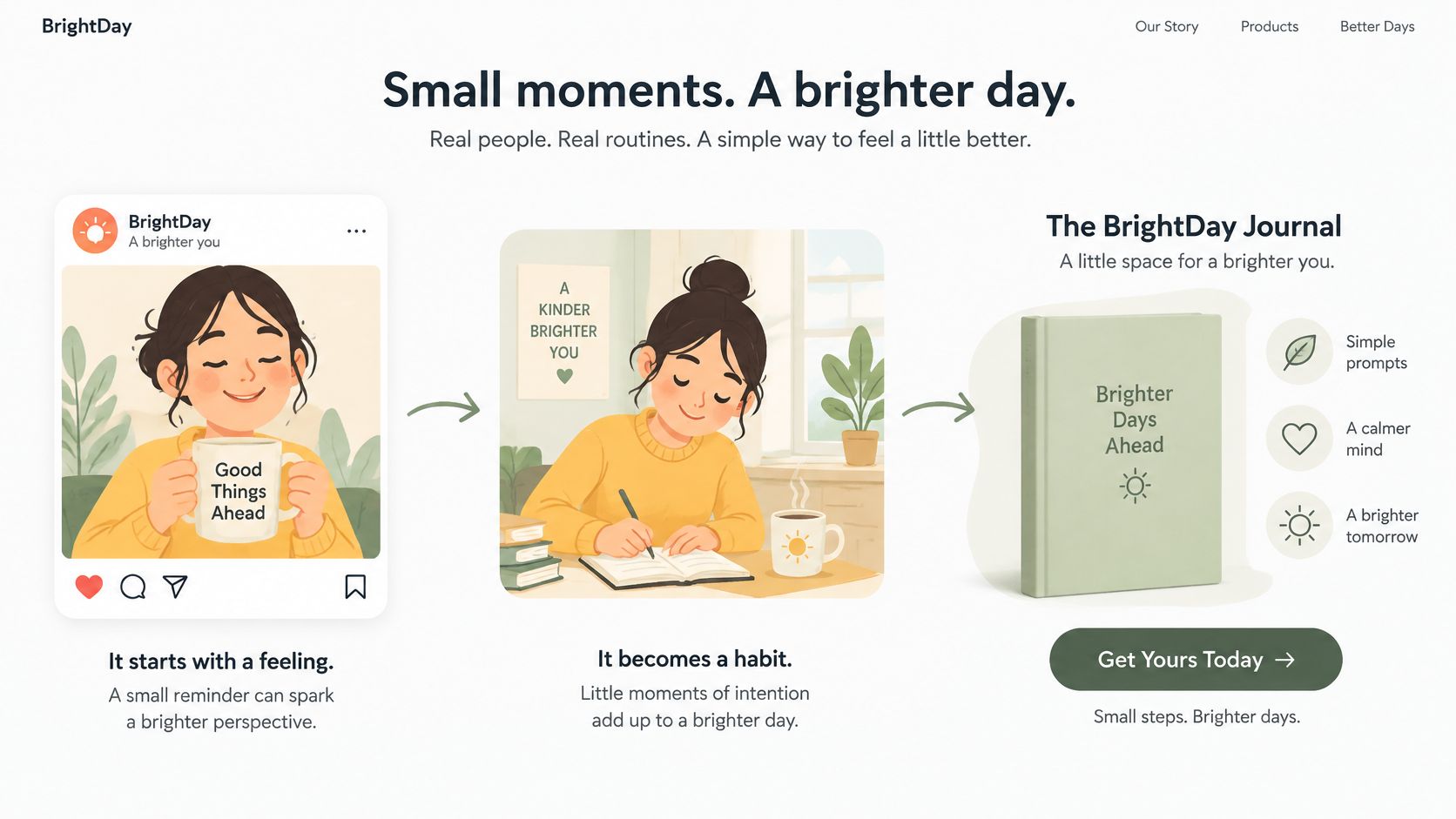
Baymard's mobile ecommerce research benchmarked 138 major US and European mobile sites and found 62% rated mediocre or worse, with none achieving an overall good mobile UX. Mobile traffic often represents about half of ecommerce visits, while mobile conversion can be less than half of desktop conversion. A long, desktop-shaped story will waste a better hook.
I would build one advertorial per angle (pain, identity, or a single objection) and send the same ad to the product page and to the advertorial. Judge the pair on cost per purchase, not on click-through rate.
- Match the creative: Repeat that ad's headline and hero image so the click feels continuous.
- Prove, then ask: Short paragraphs, one promise above the fold, and the first button after proof.
- Draft, then edit: An AI advertorial builder for DTC brands can start from a product URL. You still rewrite the hook to the ad.
2. Awareness-Level and Message-Market Matching
A cold click fails when the page opens at the wrong awareness level. Eugene Schwartz's five stages still set the first screen: unaware, problem-aware, solution-aware, product-aware, and most aware. A problem-aware stranger needs the pain named and the cost of the usual fix made clear. A most-aware visitor needs the offer, proof, guarantee, and a reason to act today. Same product, different opening, different page.
GWI's 2025 research describes consumers using social platforms for discovery, messaging, and product research, with video leading usage. HubSpot reports the same broad pattern: social is a top product-discovery channel across Gen Z, Millennial, and Gen X buyers. Treat the caption, ad, and landing page as one argument. If they make three promises, paid reach only buys confusion faster.
Practical rule: Write one headline per awareness stage before building the page. Label the ad set and landing URL with the same stage tag so reports stay readable.
Put problem-aware pages in front of cold prospecting. Save most-aware pages for cart abandoners, past buyers, and product viewers. For a supplement, run an ingredient explainer to solution-aware traffic and a proof-led offer to product-aware visitors. Judge cost per purchase inside each label.
3. Paid Social Prospecting and Warm Audience Retargeting
Prospecting buys the first touch. Retargeting has to move the same person one step closer, so the warm ad should change the page, the proof, or the offer.
DataReportal's Digital 2025 Global Overview Report put active social-media user identities at about 5.24 billion in 2025, a 4.1% rise over the prior 12 months. Treat those identities as reach rather than unique people, and treat one platform as a rented room.
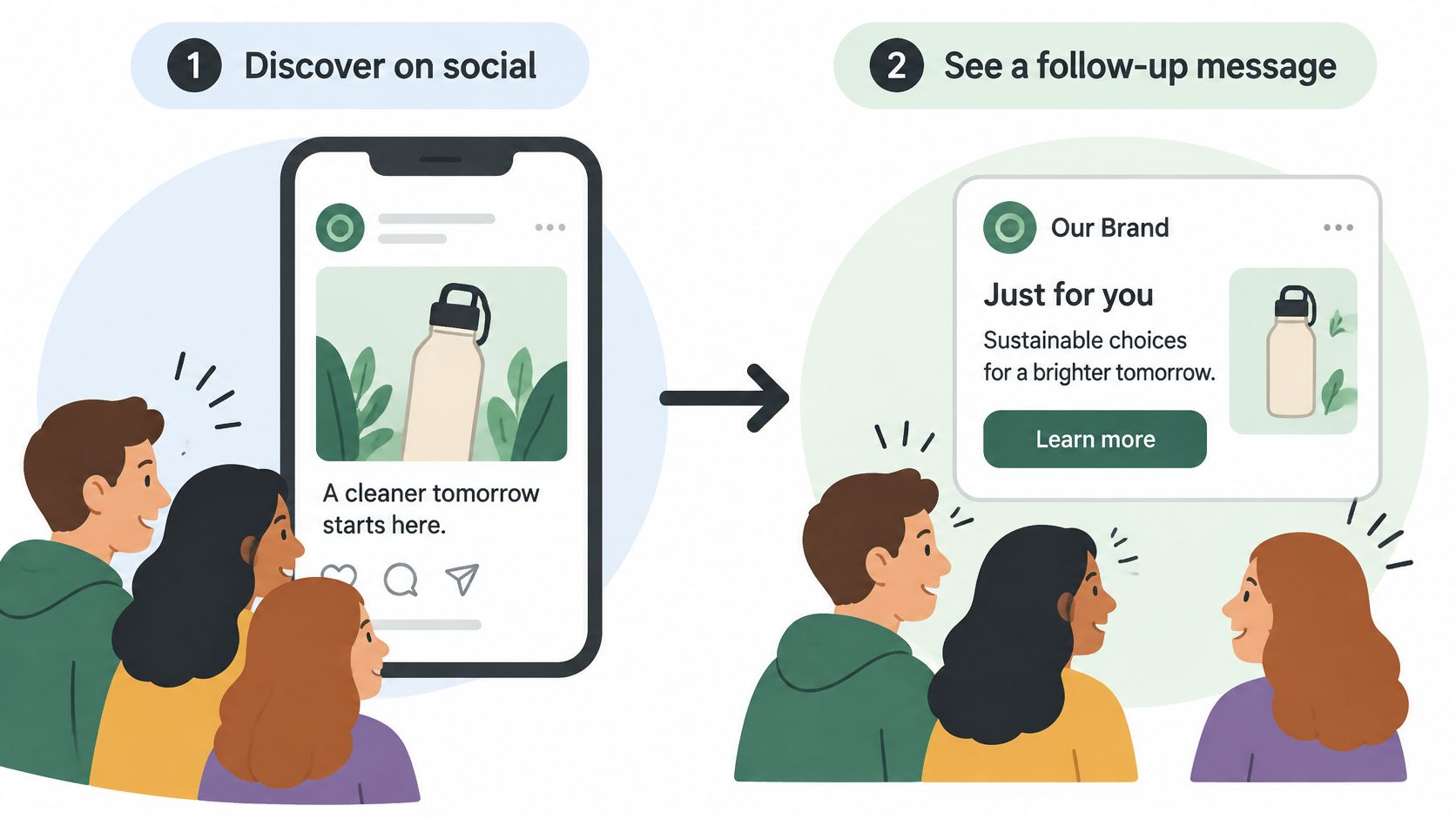
For cold Meta or TikTok traffic, run one angle to two destinations in the same window: the product page and a pre-sell page. Keep the audience, creative and budget close enough that the destination is the variable. I do not call a page loser until the challenger has spent at least 5 times the control's cost per acquisition over that window.
Refresh creative every one to two weeks, or sooner when frequency climbs above the account's normal baseline. Exclude purchasers so acquisition ads stop paying to reach people who already bought.
Treat warm traffic as a sequence.
- 7-day engagers: Return them to the education page they did not finish, with a tighter next step.
- 30-day product viewers: Lead with proof and a product-page offer, including dynamic product ads for the item viewed.
- 180-day warm traffic: Use a lighter reminder, then suppress after purchase.
The path I trust before scaling is video ad, advertorial, then product offer.
4. Comparison and Best-Of Listicle Pages for Search and Social
"Best mineral sunscreen for sensitive skin" is a buying query and a social save. A ranked page meets it with clear criteria, a few honest alternatives, and your product as the fit for that use case. Wirecutter made the format familiar. A DTC brand can use the shape without pretending to be a review desk.
Lead the headline with the use case, or searchers and social clickers won't recognize themselves. Lock the criteria before you rank anything. A page that praises your product on every row reads like an ad with extra logos. Refresh prices, features, and claims on a calendar. A stale best-of page teaches the visitor not to trust the next one.
Warmer, comparison-minded buyers want a scan. Colder, skeptical buyers still need the story from the advertorial. Don't force both into one template. Presell pages for paid social campaigns are the paid-social version of the ranked page, built to pre-sell before the product click.
- Fair criteria: Texture, scent, price band, and who should skip it.
- A named winner: Explain why it wins this use case, not every use case.
- One next step: The product button sits after the verdict, not after every row.
5. Review-Led Social Proof and User-Generated Content
Cold visitors don't believe your adjectives. They believe a customer who had the same stain, the same breakout, or the same tight budget. Reviews, photos, and short clips do that work on the pre-sell page so you aren't producing a new shoot for every angle.
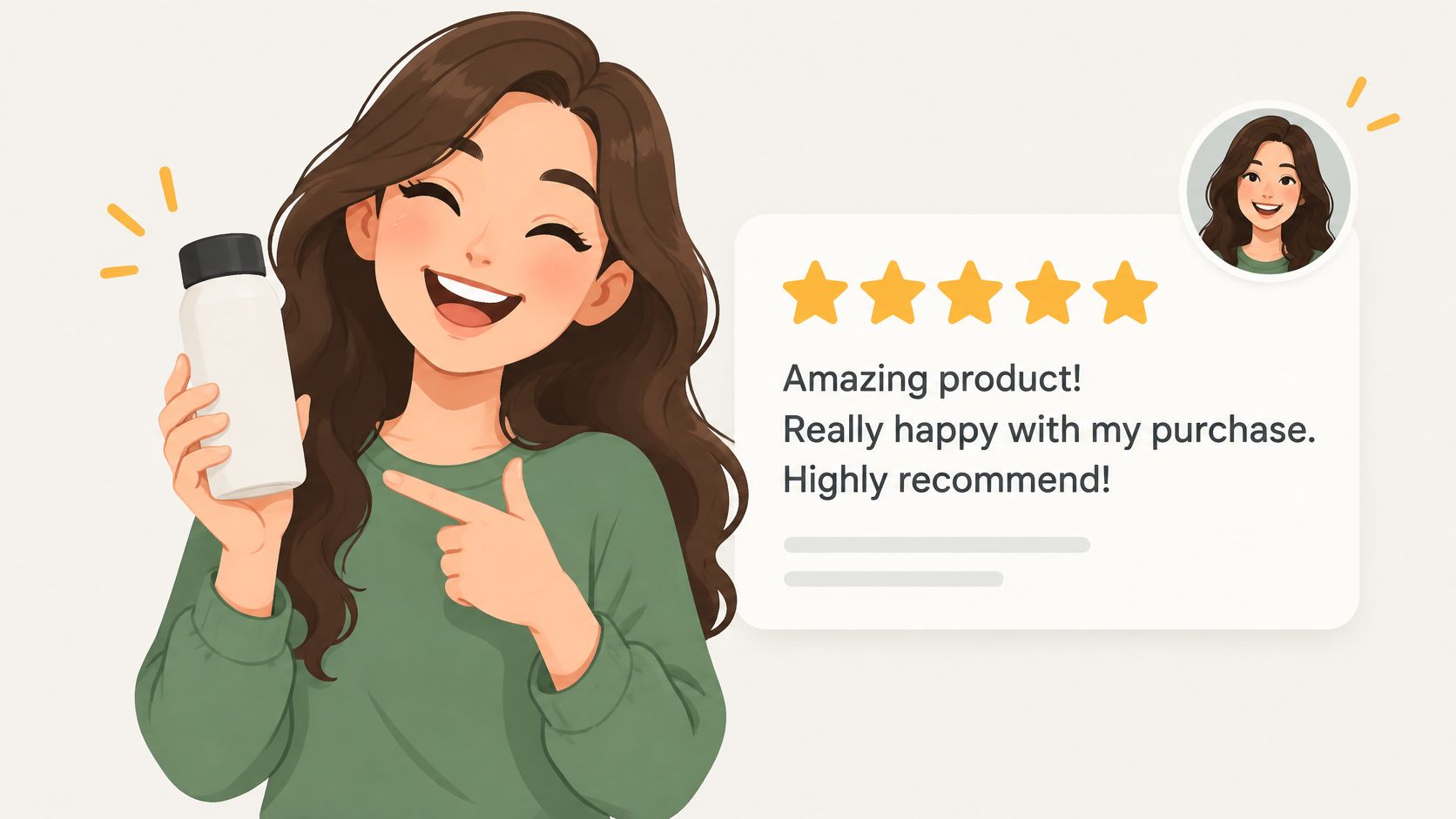
The prompt decides what the proof can do. "What did your hair do on wash day before this, and what does it do now?" returns lines you can lift into subheads. A generic "love it" star rating returns nothing. Ask one question in a post-purchase email while the result is still fresh.
Glossier grew by putting customer language in the brand. Allbirds put customer stories beside the product where buyers could see them. On a pre-sell page, match each review to the objection it answers: fast-shipping lines sit under the delivery promise, frizz-fading lines under the results claim.
Get written permission before a customer's photo or story runs in an ad or on a landing page. A screenshot without a yes is a lawsuit waiting on a good week.
Teams publishing verified testimonials for generative engine optimization work by the same rules a human reader rewards: name the problem solved, keep the reviewer's context, and leave the sentence in the customer's voice. Proof that sounds like your copywriter stops working the moment the visitor has seen one real review elsewhere.
6. Creator and Influencer Partnerships
Borrowed trust beats a cold interest stack when the buyer lives in a niche your ads keep missing. A fitness creator with a small, specific following will often outsell a broad page of followers who never train.
The 2025 State of Social Media Marketing report found that 45.8% of marketers considered short-form video the most engaging content format. IAB's 2025 research says creator marketing performs best when campaigns combine authenticity, repeated exposure, and strong creator-brand fit, and it flags first-party data and contextual strategies as growing priorities. One viral post is not a system. Gymshark treated creators and affiliates as a community, not a weekend spike. You can put that creator's line in the hero of an advertorial after the organic post has done its job.
A useful walk-through of how creator ads get briefed, cut, and reused sits here.
Start with a small paid test group before a large flat fee. Ask for raw footage and paid usage rights in the contract, not after the post performs. Give each creator a dedicated link or code. Compare conversion rate and cost per purchase, not views. If the audience doesn't match the buyer, more reach makes the inefficiency louder.
7. Email and SMS List Building with Lead Magnets and Quizzes
Anonymous traffic is gone when the session ends. A list is the asset you can message again without winning the auction twice. The offer has to be about the product's problem, not a random PDF.
A skin quiz that recommends a routine, then asks for email before the result, beats "join our newsletter" on a pre-sell page. Place the opt-in after the proof section, when the visitor has a reason to stay. Tag answers (oily, postpartum, sensitive) and send the sequence that matches. A discount code with no context trains people to wait for the next code.
SMS is the faster tap for people who already opted in, not a second copy of the email. Cart reminders, back-in-stock notes, and replenishment prompts are the practical SMS marketing use cases. Don't text a stranger who only watched an ad.
- Magnet tied to the product: A sleep-supplement brand offers a wind-down checklist, not a generic wellness ebook.
- One field first: Email or phone, not a six-field form on a phone screen.
- Sequence from the tag: Quiz answers pick the emails. The broadcast goes to everyone else.
Owned reach is cheaper per extra impression. It is also slower to build, so start the capture on the pages that already get paid traffic.
8. Community Building Around Shared Identity
A community that only talks about your SKU dies when the launch calendar goes quiet. People stay for a shared goal. Peloton built features around the workout and the people in it. Patagonia organized around outdoor values, not a jacket spec sheet. The product is how members participate, not the only topic allowed.
Say a running-shoe brand hosts a weekly form-check thread and a monthly route swap. Members post because other runners answer. The brand shows up to moderate, credit useful posts, and turn repeated questions into the next ad angle. That loop is worth more than another follower campaign.
Build the room around the identity the buyer already claims. If the only activity is a coupon, you have a list with extra steps.
Reward the people who answer others, not only the people who post selfies. A small moderator budget beats a large empty group. Use the questions as copy research. If five members ask whether the shoe works on wet pavement, that objection belongs in the next pre-sell page. Don't expect the group to replace paid prospecting in month one. Expect it to lower the cost of the second and third purchase.
9. Systematic Creative and Audience Testing
Intuition is a hypothesis you forgot to write down. A test is that hypothesis with a spend floor and one change.

Duplicate the control page. Change the opening hook, or the offer, or the hero image. Not all three. Write the bet first. "A problem-led headline will lower cost per purchase because it matches the ad hook." If you can't say what would prove you wrong, you don't have a test.
Set a minimum spend or a minimum number of purchases before you name a winner. Calling it early because Tuesday looked good is how losing angles get scaled. Keep a one-line log: angle, variable, spend, result, decision. Weekly creative sprints work when each one has that line. They waste money when the team "tries a few things" and then can't remember which URL won.
I would not test a new audience and a new page in the same cell. You won't know which change moved the cost. Hold the audience steady, swap the page, then do the reverse on the winner.
10. Earned Media, Editorial Placement, and PR
Press won't replace a prospecting budget, and a product announcement rarely earns the story. A specific angle will. Dollar Shave Club's early launch worked because the problem and the joke were easy to retell, so coverage and social shares arrived together. A founder pitch to a niche newsletter can do a smaller version of that for one buyer group.
Build a short list of journalists and newsletter writers who already cover your category. Lead with the story, the data point you can stand behind, or the customer pattern. Don't lead with "we'd love to send a sample." After something publishes, quote it on the pre-sell page next to the claim it supports. Third-party ink reduces risk for cold visitors in a way your own headline cannot.
Editorial pages and advertorials are not the same asset. One is coverage you earn. The other is a page you control and send paid traffic to. Landra's guide to advertorials versus editorials draws that line so a news-style layout doesn't get mistaken for a press hit. Use both. Don't let the unpaid story be the only place the promise is clear.
10 Audience Development Strategies at a Glance
| Strategy | Traffic Stage | Primary Channel | Best For |
|---|---|---|---|
| Editorial Pre-Sell Pages (Advertorials) for Cold Traffic | Cold awareness to purchase intent | Paid social landing pages | Educating cold visitors and bridging ads to product pages |
| Awareness-Level and Message-Market Matching | Unaware to most aware | Segmented ads and landing pages | Matching messages to prospect knowledge and intent |
| Paid Social Prospecting and Warm Audience Retargeting | Cold prospecting through warm retargeting | Meta and TikTok ads | Reaching new audiences and converting engaged visitors |
| Comparison and Best-Of Listicle Pages for Search and Social | Active research and consideration | Organic search and social | Capturing high-intent shoppers comparing options |
| Review-Led Social Proof and User-Generated Content | Consideration and conversion | Landing pages, social, and ads | Building trust and reducing perceived purchase risk |
| Creator and Influencer Partnerships | Awareness and consideration | Creator content and paid social | Reaching niche audiences through trusted voices |
| Email and SMS List Building with Lead Magnets and Quizzes | Consideration through retention | Email and SMS | Capturing leads and nurturing them with relevant messages |
| Community Building Around Shared Identity | Awareness, loyalty, and advocacy | Social groups, forums, and events | Growing customer connection and word-of-mouth |
| Systematic Creative and Audience Testing | Across the funnel | Paid media and landing pages | Finding and scaling effective audience and creative combinations |
| Earned Media, Editorial Placement, and PR | Awareness and credibility building | Press, podcasts, and newsletters | Gaining third-party validation and reaching new audiences |
Put the System to Work: From Cold Clicks to Owned Audiences
Pick one cold-traffic fix and one owned-audience build, and run them in the same month. A sharper ad will not save a page that argues with the click. A bigger list will not help if every new buyer still costs more than the product can support.
The fastest first test is routing the same ads to an editorial pre-sell page instead of the product page. Landra's founder ran that test and cut customer acquisition cost by 46%. Landra generates advertorials, listicles, and presell pages from any product URL. The Starter plan includes a click-anything editor and publishing to Shopify, a Landra URL, or HTML export. You keep the ads, the creative, and the test design. The page is the variable.
Checkout can still erase the gain. Baymard's checkout usability benchmark of 344 leading US and European ecommerce sites found 65% had mediocre-or-worse checkout UX, while only 2% rated as good. Its usability testing indicates the average large-scale ecommerce site could potentially increase conversion by 35% through checkout improvements. If the advertorial promises a simple order and the checkout contradicts it, you'll blame the audience for a leak that sits after the click.
A 30-day sequence
Week 1. Pull the three ad angles already spending. Write one headline per angle. Don't build three full sites yet.
Week 2. Publish one advertorial for the cold angle and one comparison page for people already choosing. Point only those campaigns at the new URLs. Leave a product-page control live.
Week 3. Read objections in comments, creator replies, and reviews. Rewrite one section and add a proof block. Place an email or SMS opt-in after that proof, with a magnet tied to the same problem.
Week 4. Kill the destination with the worse cost per purchase. Exclude buyers. Retarget non-buyers with the more-aware page. Log the winning angle so the next test changes one variable.
Measure the steps, not the vibe. Ad engagement, presell interaction, product-page arrival, checkout start, and purchase, split by device. A segment is not "working" because people saved the post.
Cold clicks get a page that builds belief. Warm clicks get a comparison or an offer. Anyone who isn't ready gets an owned way back. That is the whole system, and it fits in a month if you refuse to launch all ten at once.
Landra turns a product URL into an editable advertorial, listicle, or presell page so cold paid-social traffic meets a message that matches the ad. If your audience development strategies have to produce buyers, not just followers, start with the page between the click and the product. Visit Landra and generate the first draft against the angle you're already spending on.